

Students Lead Research Into AI Use in Higher Education, Revealing Critical Insights for Faculty and Institutions
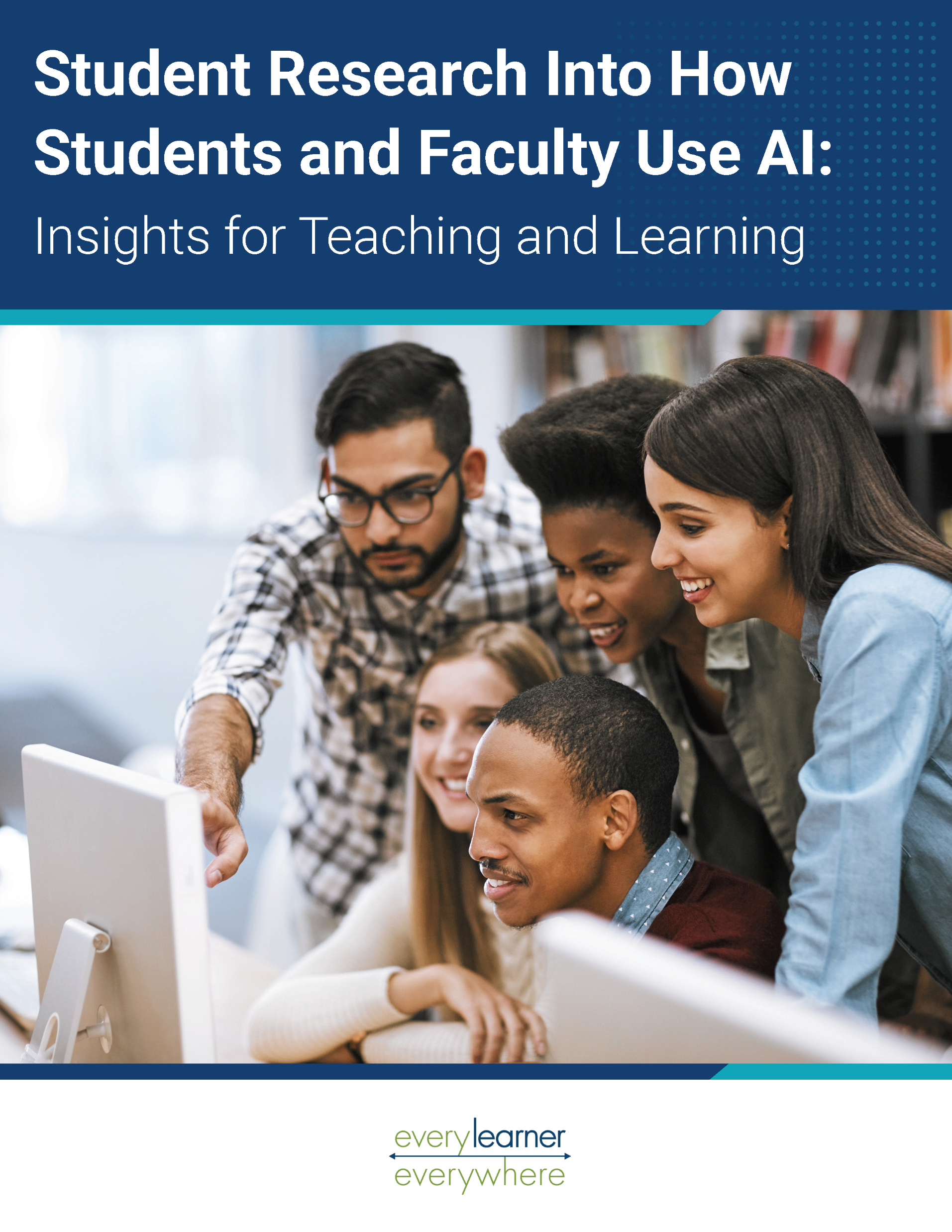
Student Research Into How Students and Faculty Use AI
New Report Authored by Student Researchers Offers First-Hand Perspective on How AI is Reshaping College Learning
BOULDER, CO, UNITED STATES, January 22, 2026 /EINPresswire.com/ -- Every Learner Everywhere today released Student Research Into How Students and Faculty Use AI: Insights for Teaching and Learning, a first-of-its-kind report led by student researchers that examines how generative AI is transforming higher education from the student perspective.
The comprehensive study, conducted by two cohorts of digital learning interns during the 2024-25 academic year, offers an unprecedented look at AI adoption on college campuses—not through the lens of administrators or technology vendors, but through the experiences of the students using these tools daily.
Students are already using AI, regardless of institutional policies. In developing this toolkit, we wanted faculty to understand not just what tools students are using, but how they’re thinking about AI's role in their education.
Key Findings
The student interns documented widespread AI adoption across disciplines, with nuanced perspectives on both benefits and challenges:
On Learning Benefits: Students described AI as valuable for breaking down complex concepts, generating practice materials, and supporting creative exploration—when used with appropriate human oversight.
On Challenges: Participants expressed worries about overreliance, with one student noting, "I used to be a way better writer, but now I copy it right into chat and it gives a robotic voice that is not even my natural voice."
On Access: Students identified a digital divide beyond simple access, pointing to disparities in AI literacy and the gap created by premium versus free tool versions.
On Faculty Response: The research revealed that AI is fundamentally reshaping pedagogical priorities, with educators shifting from "instructor-as-lecturer to instructor-as-curator and guide."
As part of the project, the interns created an innovative AI Toolkit Database cataloging approximately 70 generative AI tools across multiple categories, from chatbots and writing assistants to music generators and image creation tools. Designed as a living resource that accepts community contributions, the database provides students and educators with at-a-glance information on functionality, pricing, data sources, and privacy considerations.
The report examines AI applications across three major categories: text, images, and audio; identifying creative use cases in disciplines ranging from natural sciences to humanities to social sciences, while outlining critical ethical, legal, and environmental considerations.
As faculty continue to explore the role of generative AI in teaching and learning, we invite them to engage directly with students in shaping its use. "AI has forced me—and hopefully my students—to become more intentional about how we use knowledge, not just memorize it," shared one faculty member interviewed for the study.
The work shared in this report reflects the curiosity, critical perspective, and creativity of students and faculty actively engaging with the emerging realities of generative AI in higher education. The student interns identified three main themes emerging from their research:
1. Pedagogical Promise vs. Academic Integrity: While AI can personalize learning and streamline feedback, concerns about fairness and detecting plagiarism remain paramount
2. Need for Clear Policies: Students expressed uncertainty about acceptable use, pointing to inconsistent institutional guidance
3. Continuous Change: The AI landscape evolves so rapidly that static resources become obsolete, requiring living databases and ongoing open dialogue
The report was authored by students from Spelman College, Fisk University, University of Illinois Urbana-Champaign, and University of Mississippi, with contributions from students at University of Maryland and Georgia Institute of Technology. All interns had prior experience with AI tools and ranged from enthusiastic to skeptical about AI's promise for education.
This report underscores a core principle of Every Learner Everywhere: Transformation in teaching and learning happens best when it is co-designed with those most affected. By foregrounding the student experience, we can ensure AI is integrated in ways that foster trust, student success, and shared responsibility.
The full report and AI Toolkit Database are available at everylearnereverywhere.org/resources/student-research-into-how-students-and-faculty-use-ai
To download the free resource or learn more about Every Learner Everywhere and its collaborative approach to improved student success in higher education through digital learning, visit everylearnereverywhere.org. To contact Every Learner Everywhere, email everylearner@wiche.edu, or call (303) 541-0208. Follow Every Learner on LinkedIn at Every Learner Everywhere.
Emilie Cook
Every Learner Everywhere | WCET
+1 3035410208
email us here
Visit us on social media:
LinkedIn
Legal Disclaimer:
EIN Presswire provides this news content "as is" without warranty of any kind. We do not accept any responsibility or liability for the accuracy, content, images, videos, licenses, completeness, legality, or reliability of the information contained in this article. If you have any complaints or copyright issues related to this article, kindly contact the author above.
